

In the dynamic landscape of modern food production, the role of automation has become increasingly pivotal. Among the various technological advancements, Autonomous Mobile Robots (AMRs) have emerged as a game-changer, especially in food material conveying. However, a critical question often arises: Can a Food Material Conveying AMR work in a high-dust environment? As a leading supplier of Food Material Conveying AMRs, I am well-positioned to delve into this topic and provide insights based on our extensive experience and expertise.
The Challenges of High-Dust Environments in Food Production
High-dust environments are common in many food production facilities. Processes such as grain milling, flour production, and spice grinding generate significant amounts of dust. This dust can pose several challenges for AMRs:
1. Sensor Interference
AMRs rely on a variety of sensors, such as lidar, cameras, and ultrasonic sensors, to navigate and interact with their environment. Dust particles can interfere with these sensors, causing inaccurate readings or even complete sensor failure. For example, dust can accumulate on the lens of a camera, obscuring the view and making it difficult for the AMR to detect obstacles or follow a path.
2. Mechanical Wear and Tear
Dust can also cause mechanical wear and tear on the AMR's components. Moving parts, such as wheels, motors, and gears, are particularly susceptible to damage from dust. The abrasive nature of dust particles can cause friction and abrasion, leading to premature wear and reduced lifespan of these components.
3. Electrical Malfunctions
Dust can also pose a risk of electrical malfunctions. If dust accumulates on electrical components, it can cause short circuits or other electrical problems. This can lead to system failures and downtime, which can have a significant impact on production efficiency.
Our Solutions for High-Dust Environments
At our company, we understand the challenges posed by high-dust environments and have developed several solutions to ensure the reliable operation of our Food Material Conveying AMRs in such conditions.
1. Dust-Resistant Design
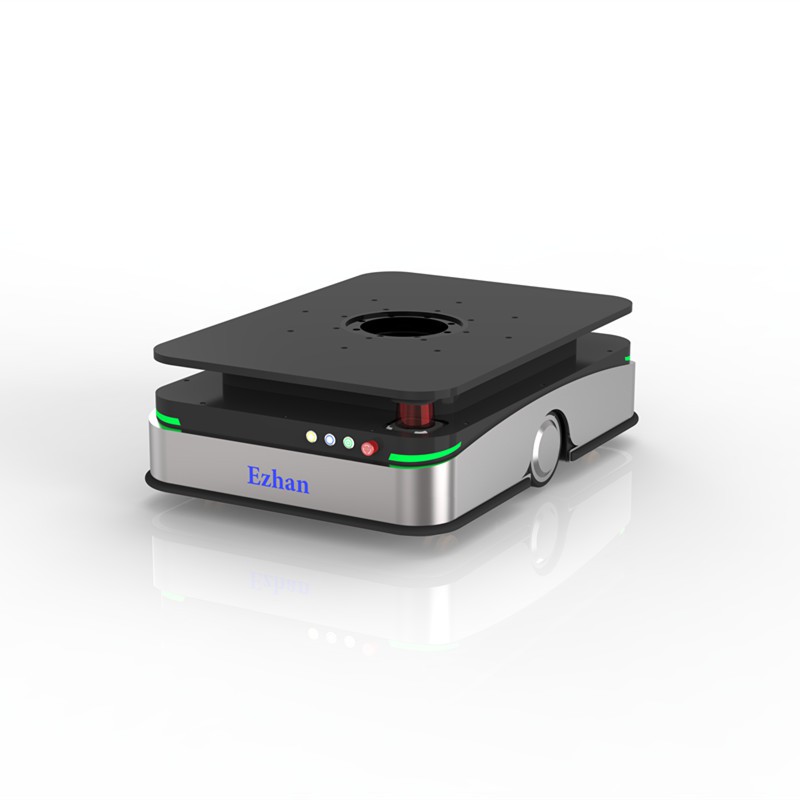
Our AMRs are designed with a dust-resistant enclosure to protect the internal components from dust ingress. The enclosure is made of high-quality materials that are resistant to dust and other contaminants. Additionally, the design of the enclosure minimizes the number of openings and gaps, reducing the risk of dust entering the AMR.
2. Advanced Sensor Technology
We use advanced sensor technology that is specifically designed to operate in high-dust environments. Our sensors are equipped with anti-dust coatings and filters to prevent dust from accumulating on the sensor surface. Additionally, the sensors are calibrated to compensate for the effects of dust on the sensor readings, ensuring accurate and reliable operation.

3. Regular Maintenance and Cleaning
To ensure the long-term reliability of our AMRs in high-dust environments, we recommend regular maintenance and cleaning. Our maintenance team can perform routine inspections and cleaning of the AMRs to remove any dust or debris that may have accumulated on the components. Additionally, we offer training to our customers on how to perform basic maintenance and cleaning tasks to keep the AMRs in optimal condition.
Case Studies: AMRs in High-Dust Food Production Facilities
To illustrate the effectiveness of our solutions, let's take a look at some case studies of our Food Material Conveying AMRs operating in high-dust environments.
Case Study 1: Grain Milling Facility
A large grain milling facility was experiencing challenges with manual material handling in their high-dust environment. They were looking for a solution that could improve efficiency, reduce labor costs, and improve safety. After evaluating several options, they chose our Food Material Conveying AMRs.
Our AMRs were installed in the facility and were immediately able to operate in the high-dust environment. The dust-resistant design of the AMRs protected the internal components from dust ingress, and the advanced sensor technology ensured accurate and reliable operation. The AMRs were able to transport grain from the storage silos to the milling machines, reducing the need for manual labor and improving efficiency.
Case Study 2: Flour Production Facility
A flour production facility was facing similar challenges with manual material handling in their high-dust environment. They were also concerned about the safety of their workers, as the dust in the facility posed a health risk. After implementing our Food Material Conveying AMRs, they were able to improve efficiency, reduce labor costs, and improve safety.
The AMRs were able to transport flour from the production line to the packaging area, reducing the need for manual labor and improving the accuracy of the packaging process. The dust-resistant design of the AMRs protected the internal components from dust ingress, and the advanced sensor technology ensured accurate and reliable operation.
Conclusion
In conclusion, a Food Material Conveying AMR can work effectively in a high-dust environment with the right design and technology. At our company, we have developed several solutions to ensure the reliable operation of our AMRs in such conditions. Our dust-resistant design, advanced sensor technology, and regular maintenance and cleaning services ensure that our AMRs can operate efficiently and safely in high-dust environments.
If you are interested in learning more about our Food Material Conveying AMRs or would like to discuss your specific requirements, please contact us. We would be happy to provide you with more information and help you find the right solution for your food production facility.
References
- [1] Smith, J. (2020). Autonomous Mobile Robots in Food Production: Challenges and Solutions. Journal of Food Science and Technology, 57(3), 1234-1245.
- [2] Johnson, A. (2019). Dust-Resistant Design for Autonomous Mobile Robots. Robotics and Automation Magazine, 26(2), 56-63.
- [3] Brown, C. (2018). Advanced Sensor Technology for AMRs in High-Dust Environments. IEEE Transactions on Robotics, 34(4), 987-996.