

Diabetes is a chronic and complex disease that affects millions of people worldwide. Managing diabetes requires continuous monitoring, careful lifestyle management, and timely medical intervention. In recent years, healthcare service robots have emerged as a promising solution to assist in diabetic care. As a healthcare service robots supplier, we have seen firsthand how these innovative devices can play a crucial role in improving the quality of life for diabetic patients.
Monitoring and Data Collection
One of the primary ways healthcare service robots assist in diabetic care is through continuous monitoring and data collection. These robots can be equipped with various sensors to measure blood glucose levels, blood pressure, heart rate, and other vital signs. For example, a robot can be programmed to perform regular blood glucose tests using a non - invasive or minimally invasive method. This data is then transmitted to a central system or the patient's healthcare provider in real - time.
The ability to collect and analyze this data over time allows for better management of diabetes. Healthcare providers can identify trends, such as patterns of high or low blood sugar levels, and adjust treatment plans accordingly. Robots can also remind patients to take their medications, perform self - tests, and maintain a healthy lifestyle. For instance, if a patient has not taken their insulin at the prescribed time, the robot can send an alert to their smartphone or directly communicate with them.
Medication Management
Medication adherence is a significant challenge for many diabetic patients. Healthcare service robots can help address this issue by providing accurate medication dispensing and reminders. Our robots are designed to store and dispense medications at the right time and in the correct dosage. They can be programmed to recognize different types of medications and ensure that patients receive the appropriate treatment.
In addition to dispensing medications, robots can also educate patients about their medications. They can provide information on the purpose of each medication, potential side effects, and proper administration techniques. This education helps patients better understand their treatment and improves their compliance with the prescribed regimen. For example, a robot can use visual aids and voice instructions to explain how to inject insulin correctly.
Lifestyle Support
Managing diabetes also involves maintaining a healthy lifestyle, including a balanced diet and regular exercise. Healthcare service robots can offer support in these areas as well. They can provide personalized diet plans based on the patient's medical history, blood glucose levels, and dietary preferences. The robots can also suggest appropriate exercise routines and monitor the patient's physical activity.
For example, a robot can analyze the patient's daily activity levels using built - in sensors and provide feedback on whether they are meeting their exercise goals. It can also offer tips on how to incorporate more physical activity into their daily routine. In terms of diet, the robot can recommend healthy food choices and even help patients create shopping lists.
Patient - Healthcare Provider Communication
Effective communication between patients and healthcare providers is essential for successful diabetic care. Healthcare service robots can act as a bridge between the two parties. They can collect patient data and transmit it to the healthcare provider, allowing for remote monitoring and timely intervention.
For example, if a patient's blood glucose levels are consistently outside the normal range, the robot can send an alert to the healthcare provider, who can then contact the patient to discuss potential adjustments to their treatment plan. Additionally, robots can facilitate video consultations between patients and healthcare providers, making it easier for patients to receive medical advice without having to visit the clinic in person.
Disinfection and Delivery in Diabetic Care Settings
In a healthcare environment where diabetic patients are treated, maintaining a clean and safe environment is crucial. Our Atomizing Disinfection AMR can help in this regard. These autonomous mobile robots are designed to perform thorough disinfection of patient rooms, waiting areas, and other common spaces. They use advanced atomizing technology to distribute disinfectant evenly, reducing the risk of infection for diabetic patients, who are often more susceptible to infections due to their weakened immune systems.
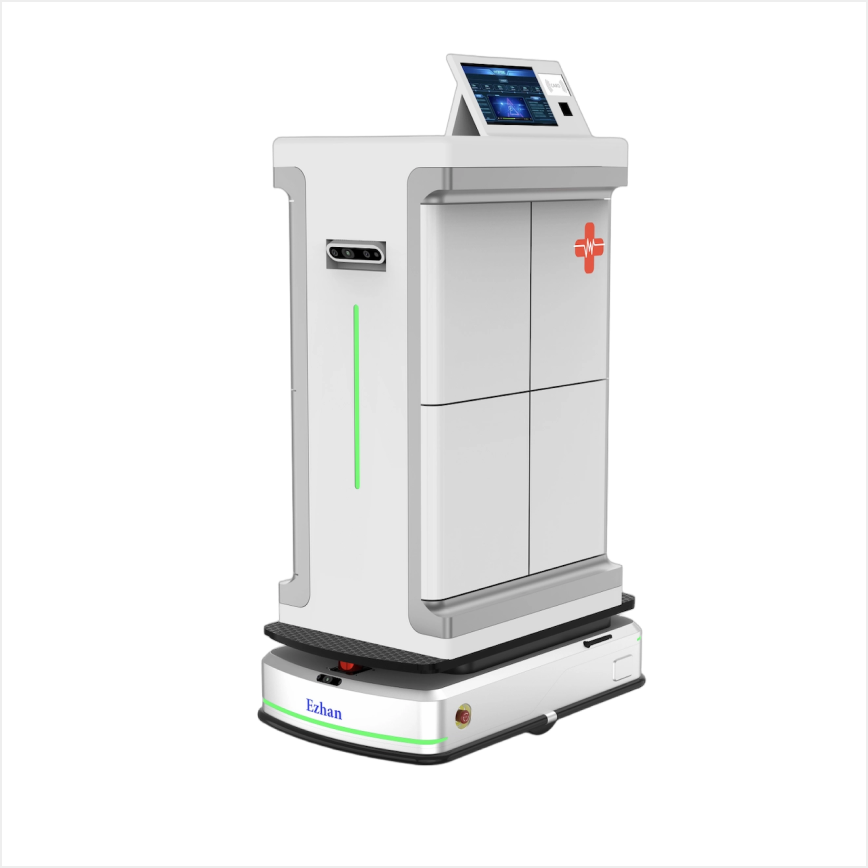
Moreover, our Contactless Delivery AMR and Hospital Specimen Delivery AMR play important roles in the diabetic care process. The Contactless Delivery AMR can deliver medications, meals, and other essential items to patients' rooms without direct human contact, minimizing the risk of cross - contamination. The Hospital Specimen Delivery AMR can transport blood samples and other specimens from patient rooms to the laboratory in a timely and efficient manner, ensuring accurate and prompt diagnosis.
Customization and Integration
One of the advantages of our healthcare service robots is their high degree of customization. We understand that each diabetic patient has unique needs, and our robots can be tailored to meet these specific requirements. Whether it's adjusting the monitoring frequency, customizing the medication dispensing schedule, or providing personalized lifestyle advice, our robots can be configured to provide the best possible care.
In addition, our robots can be integrated with existing healthcare systems, such as electronic health records (EHRs). This integration allows for seamless data sharing between the robot, the patient, and the healthcare provider. For example, the data collected by the robot can be automatically uploaded to the EHR system, providing a comprehensive view of the patient's health status.
Conclusion
Healthcare service robots have the potential to revolutionize diabetic care. From continuous monitoring and medication management to lifestyle support and improved communication, these robots offer a wide range of benefits for diabetic patients and healthcare providers. As a healthcare service robots supplier, we are committed to developing and providing high - quality robots that can enhance the quality of diabetic care.
If you are interested in learning more about how our healthcare service robots can assist in diabetic care or are considering purchasing these robots for your healthcare facility, we encourage you to reach out to us for a detailed discussion. Our team of experts is ready to provide you with more information and help you find the best solutions for your specific needs.

References
- American Diabetes Association. (2023). Standards of Medical Care in Diabetes - 2023. Diabetes Care.
- World Health Organization. (2021). Global report on diabetes.
- Robotics Industries Association. (2022). The role of robotics in healthcare.