

As a supplier of healthcare service robots, I've witnessed firsthand the transformative impact these machines have on the healthcare industry. However, to ensure their optimal performance and longevity, it's crucial to understand the environmental requirements they need to operate effectively. In this blog, I'll delve into the key environmental factors that healthcare service robots must contend with and how these conditions can affect their functionality.
Temperature and Humidity
One of the most critical environmental factors for healthcare service robots is temperature and humidity. These robots are equipped with sensitive electronic components that can be adversely affected by extreme temperatures and high humidity levels. For instance, if a robot is exposed to temperatures outside its specified operating range, it may experience malfunctions or even permanent damage.
Most healthcare service robots are designed to operate within a temperature range of 5°C to 40°C (41°F to 104°F). This range ensures that the internal components of the robot, such as the battery, motors, and sensors, can function properly. If the temperature exceeds this range, the robot may overheat, leading to reduced performance or system failures.
Similarly, humidity levels can also impact the performance of healthcare service robots. High humidity can cause condensation to form on the robot's internal components, leading to corrosion and electrical shorts. To prevent this, most robots are designed to operate within a relative humidity range of 20% to 80%. It's important to note that some robots may have specific humidity requirements, so it's essential to consult the manufacturer's specifications before deploying the robot in a particular environment.
Air Quality
Another important environmental factor for healthcare service robots is air quality. These robots are often used in healthcare facilities, where the air may contain dust, pollen, and other contaminants. These particles can accumulate on the robot's sensors and other components, leading to reduced performance and accuracy.
To ensure optimal performance, healthcare service robots are typically equipped with air filters that can remove dust and other contaminants from the air. These filters need to be regularly cleaned or replaced to maintain their effectiveness. In addition, it's important to ensure that the robot is operating in a well-ventilated area to prevent the buildup of dust and other contaminants.
Floor Conditions
The floor conditions in a healthcare facility can also have a significant impact on the performance of healthcare service robots. These robots are designed to navigate on flat, smooth surfaces, and uneven or slippery floors can cause them to malfunction or get stuck.
To ensure optimal performance, it's important to ensure that the floors in the healthcare facility are clean, dry, and free of debris. In addition, the floors should be level and free of any obstacles that could impede the robot's movement. If the floors are uneven or slippery, it may be necessary to install special flooring or use traction aids to ensure the robot can operate safely and effectively.
Lighting Conditions
Lighting conditions can also affect the performance of healthcare service robots. These robots rely on sensors and cameras to navigate their environment, and poor lighting conditions can make it difficult for them to detect obstacles and navigate safely.
To ensure optimal performance, it's important to ensure that the healthcare facility is well-lit. This can be achieved by installing adequate lighting fixtures and ensuring that the lighting is evenly distributed throughout the facility. In addition, it's important to avoid using bright lights or glare that could interfere with the robot's sensors and cameras.
Noise Levels
Noise levels can also have an impact on the performance of healthcare service robots. These robots rely on sensors and microphones to detect their environment, and high noise levels can make it difficult for them to detect obstacles and navigate safely.
To ensure optimal performance, it's important to ensure that the healthcare facility is relatively quiet. This can be achieved by installing soundproofing materials and ensuring that the equipment in the facility is properly maintained to reduce noise levels. In addition, it's important to avoid using loud equipment or machinery near the robot to prevent interference with its sensors and microphones.
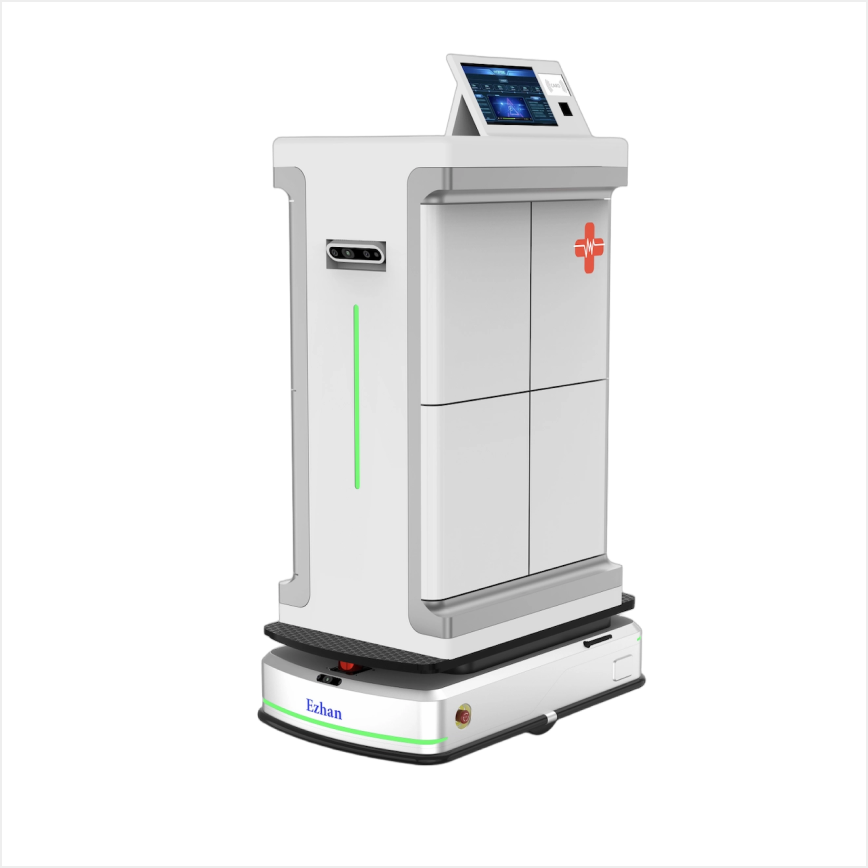

Impact on Different Types of Healthcare Service Robots
The environmental requirements can vary depending on the type of healthcare service robot. Let's take a look at how these factors affect some common types of robots in the healthcare industry.
Contactless Delivery AMR
The Contactless Delivery AMR is designed to transport medical supplies, medications, and other items within a healthcare facility. This robot needs to operate in an environment with stable temperature and humidity to ensure the integrity of the items it is carrying. For example, certain medications may be sensitive to temperature changes, so the robot's internal storage area must be maintained within the appropriate temperature range. Additionally, the robot's navigation system relies on clear floor markings and a relatively dust - free environment to accurately move from one location to another.
Atomizing Disinfection AMR
The Atomizing Disinfection AMR is used to disinfect hospital rooms and other healthcare areas. It is exposed to chemicals and disinfectants during its operation. Therefore, the robot's materials must be resistant to corrosion caused by these substances. The humidity in the environment can also affect the effectiveness of the atomization process. If the humidity is too high, the disinfectant droplets may not disperse properly, reducing the disinfection efficiency.
Hospital Specimen Delivery AMR
The Hospital Specimen Delivery AMR is responsible for transporting biological specimens, which are often very sensitive to environmental conditions. Temperature control is of utmost importance to ensure the integrity of the specimens. The robot's internal storage compartments need to be maintained at a specific temperature range to prevent the specimens from spoiling. Moreover, the robot needs to operate in a clean environment to avoid contamination of the specimens.
Importance of Meeting Environmental Requirements
Meeting the environmental requirements for healthcare service robots is not only crucial for their proper functioning but also for patient safety and the overall efficiency of the healthcare facility. If a robot malfunctions due to environmental factors, it can lead to delays in patient care, loss of medical supplies, and even potential harm to patients.
For example, if a Contactless Delivery AMR fails to deliver medications on time because of overheating due to high temperatures, it can have serious consequences for patients who rely on those medications. Similarly, if an Atomizing Disinfection AMR does not operate effectively due to improper humidity levels, it may not be able to disinfect the area thoroughly, increasing the risk of infection.
Conclusion
In conclusion, understanding and meeting the environmental requirements for healthcare service robots is essential for their optimal performance and longevity. As a supplier, we are committed to providing our customers with robots that can operate effectively in a variety of healthcare environments. By considering factors such as temperature, humidity, air quality, floor conditions, lighting, and noise levels, we can ensure that our robots are reliable and efficient.
If you are interested in learning more about our healthcare service robots or have any questions regarding their environmental requirements, we encourage you to contact us for a detailed discussion. Our team of experts is ready to assist you in finding the right solution for your healthcare facility.
References
- "Environmental Considerations for Medical Devices" - Medical Device and Diagnostic Industry Magazine
- "Best Practices for Operating Service Robots in Healthcare Settings" - Healthcare Robotics Journal