

In recent years, the integration of healthcare service robots into medical settings has been a remarkable development. As a supplier of healthcare service robots, I've witnessed firsthand the transformative potential these machines hold. One of the most debated topics in this field is whether healthcare service robots can provide emotional support to patients. In this blog, I'll explore this question from various angles, drawing on scientific research, real - world applications, and the features of our robots.
The Current Landscape of Healthcare Service Robots
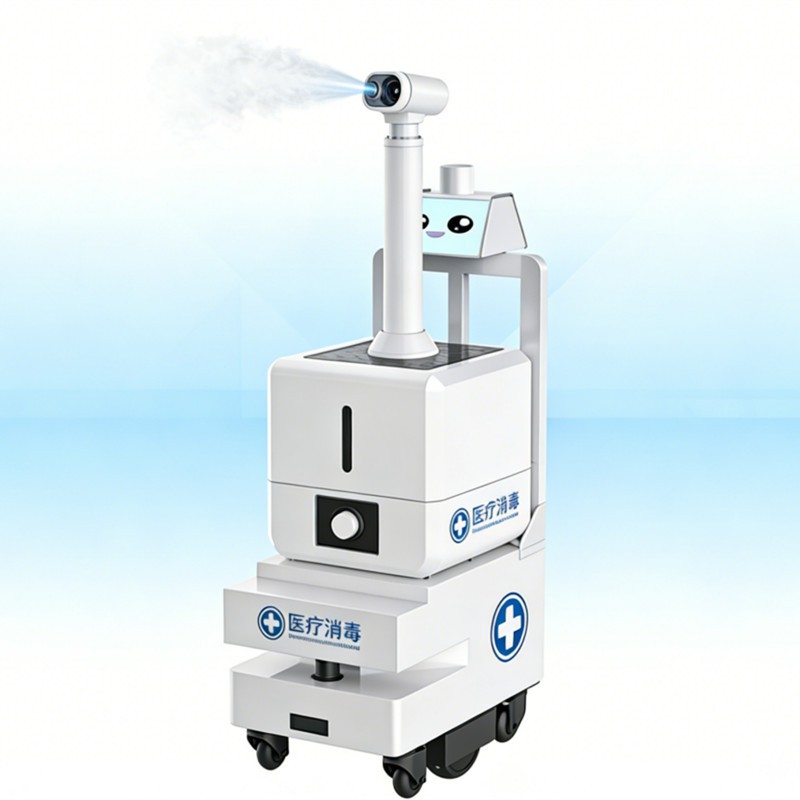
Healthcare service robots come in different forms and serve a variety of functions. Our company offers a range of models, each designed to address specific needs in the healthcare environment. For example, the Atomizing Disinfection AMR is an autonomous mobile robot that can efficiently disinfect hospital rooms, reducing the risk of cross - contamination. The Contactless Delivery AMR is another useful addition, capable of delivering medications, meals, and other essentials to patients without direct human - to - human contact. And the Hospital Specimen Delivery AMR ensures the safe and timely transport of specimens within the hospital.
The Need for Emotional Support in Healthcare
Patients often experience high levels of stress, anxiety, and loneliness during their hospital stays. Emotional support can play a crucial role in their recovery process. Studies have shown that positive emotional states can enhance the immune system, reduce pain perception, and improve overall well - being. Traditional emotional support has mainly been provided by healthcare professionals, family, and friends. However, due to the increasing patient load and the limited availability of human resources, there is a growing need for alternative sources of emotional support.
Can Robots Provide Emotional Support?
1. Technological Capabilities
Modern healthcare service robots are equipped with advanced technologies that enable them to interact with patients in a more human - like way. For instance, they can be programmed with natural language processing (NLP) algorithms, allowing them to understand and respond to patients' verbal cues. They can also use facial recognition technology to detect patients' emotional states, such as sadness, anxiety, or happiness. Based on these detections, robots can adjust their responses accordingly. For example, if a robot detects that a patient is feeling sad, it can play soothing music or share positive stories.
2. Real - World Examples
There have been several successful case studies where healthcare service robots have provided emotional support to patients. In some pediatric hospitals, robots have been used to engage with children during their treatment. These robots can tell jokes, play games, and provide educational content, helping to distract children from their pain and anxiety. In elderly care facilities, robots have been shown to reduce feelings of loneliness among residents. They can have simple conversations, remind patients of their daily routines, and even accompany them on walks.
3. Limitations
Despite the promising potential, there are also limitations to the emotional support that robots can provide. Robots lack true human emotions and empathy. They can mimic emotional responses based on pre - programmed algorithms, but they cannot truly understand the depth of human feelings. Additionally, some patients may be skeptical about receiving emotional support from a machine, preferring the warmth and authenticity of human interaction.
Our Company's Approach
At our company, we recognize the importance of emotional support in healthcare. Our robots are designed not only to perform practical tasks but also to provide a certain level of emotional comfort. For example, our robots have a friendly appearance and a soft, soothing voice. They are programmed to use positive language and provide encouragement to patients. We also continuously update our robots' software to improve their interaction capabilities based on the latest research in human - robot interaction.
Future Prospects
The future of healthcare service robots in providing emotional support looks promising. As technology continues to evolve, robots will become more sophisticated in their ability to understand and respond to human emotions. We expect to see more integration of artificial intelligence and machine learning in these robots, allowing them to adapt to individual patients' needs better. Additionally, as patients become more accustomed to interacting with robots, the acceptance of robots as emotional support providers is likely to increase.
Conclusion
In conclusion, while healthcare service robots cannot completely replace human emotional support, they can play a valuable role in providing supplementary emotional comfort to patients. Our company is committed to developing robots that not only meet the practical needs of healthcare facilities but also contribute to the emotional well - being of patients. If you are interested in exploring how our healthcare service robots can enhance your healthcare environment and provide emotional support to your patients, we invite you to contact us for a procurement discussion.

References
- Breazeal, C. (2002). Designing sociable robots. MIT Press.
- Fong, T. W., Nourbakhsh, I. R., & Dautenhahn, K. (2003). A survey of socially interactive robots. Robotics and autonomous systems, 42(3 - 4), 143 - 166.
- Wada, K., & Shibata, T. (2007). Effects of a robot pet on physiological and psychological states of institutionalized elderly people: A one - year longitudinal study. Robotics and Autonomous Systems, 55(12), 972 - 980.